
Your Hotel Isn't Losing Altitude, You're Just Panic Landing. A field guide to not slashing rates like it's a fire sale
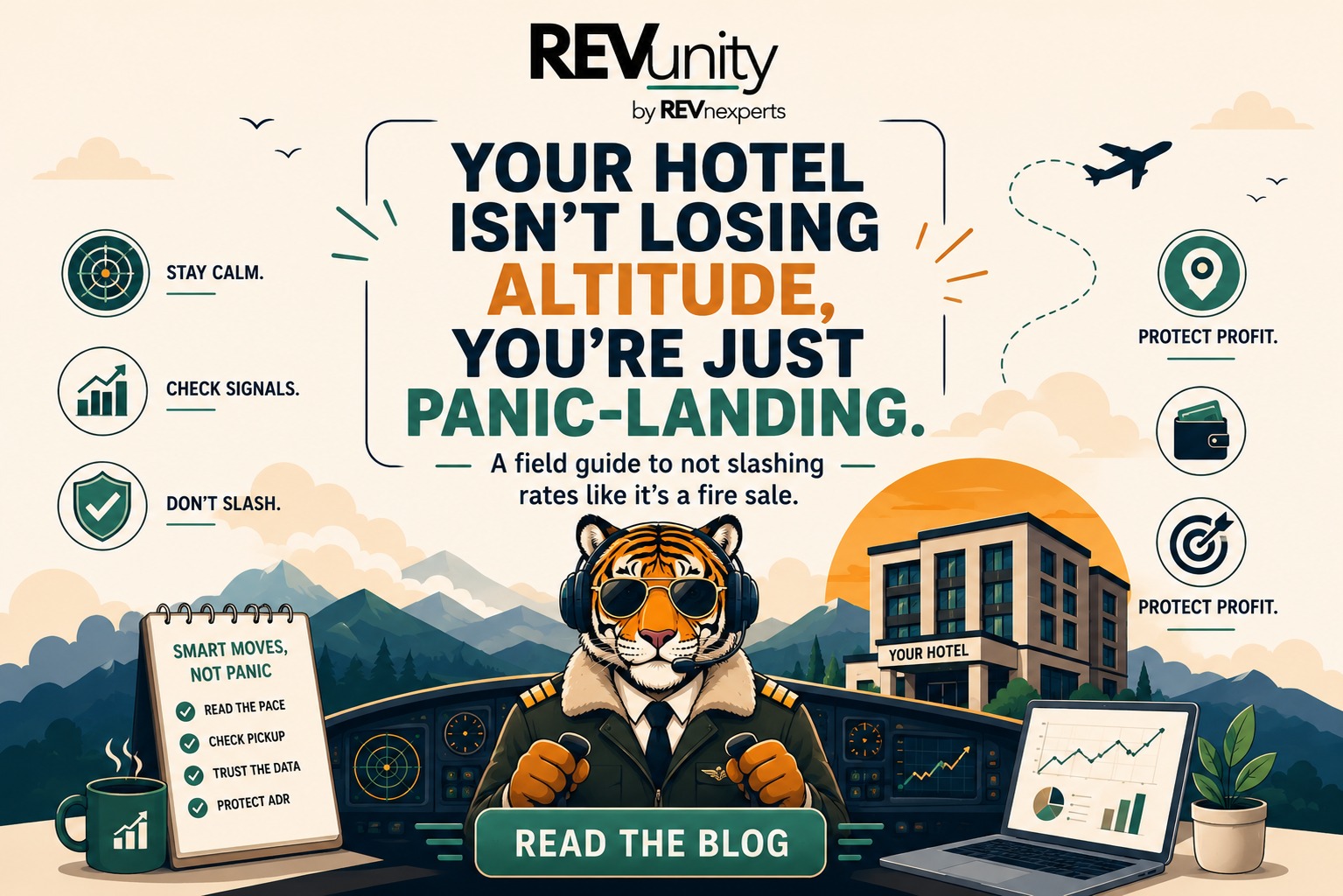
There's a very particular kind of dread that sets in for a revenue manager on a quiet Tuesday morning.
Pickup for the next few weekends looks a little soft, not alarming, just quiet, and within minutes, the instinct kicks in: cut the rate.
Here's the thing worth pausing on before that happens: a rate cut isn't a brake pedal. It's an emergency exit.
Nobody pulls the emergency exit because the flight hit a little turbulence. You pull it when something is genuinely, seriously wrong. And yet plenty of hotels treat "knock 15% off the Best Flexible Rate" as the correct response to a mildly uncertain Tuesday, rather than the last resort it's actually designed to be.
Somewhere between "demand looks soft" and "let's cut the public rate," there are supposed to be several other, much more deliberate conversations. Most teams skip straight past all of them, understandably, because a rate change takes thirty seconds, and everything else takes patience. But that shortcut is quietly expensive, and it's worth understanding why.
The Pilot Who Doesn't Panic
Picture an actual pilot hitting turbulence at 50,000 feet. They don't yank the controls and dive for the runway. They check instruments, compare against expected patterns, and make small, deliberate adjustments, reserving anything drastic for an actual emergency. When a descent does happen, it's controlled, one step at a time, not a freefall.
Revenue management works the same way, once you strip away the jargon. Your rate is your altitude. Soft demand is turbulence, uncomfortable, occasionally worrying, but very rarely the five-alarm emergency it feels like in the moment. The problem is that most teams were handed the plane without ever being handed the manual for a controlled descent. So the moment things get bumpy, they reach for the only maneuver they know.
The Protection Ladder
This is where a simple five-step framework earns its keep, five rungs between "all calm" and "public rate slashed," each one protecting revenue before you touch the number every OTA and every rate-shopping guest can see.
Level 1 — Visibility. Before assuming you're too expensive, check whether guests can actually find you. Increase marketing spend on the relevant dates, sharpen SEO, push for better OTA impression share. Often the issue isn't price, it's that you're just quiet.
Level 2 — Targeted offers. If visibility alone doesn't move the needle, go quieter still, not louder. Geo-fenced promotions and closed-user loyalty rates reach the guests who'll actually convert, without broadcasting a discount to everyone else.
Level 3 — Value packages. This is the level that rewards creativity instead of punishing margin. Bundle breakfast, parking, and dining credit. Perceived value goes up; the room rate never moves.
Level 4 — Restricted adjustments. Opaque channels like Hotwire or Priceline exist precisely for this, capturing highly price-sensitive guests without your public rate ever flinching.
Level 5 — Rate reduction. Only here, after everything else has been tried, does the public Best Flexible Rate get touched. This is the genuine emergency exit, reserved for real systemic disruption, not a Tuesday that simply looked a little quiet.
Why the Ladder Gets Skipped Anyway
If this is so logical, why does almost every hotel still jump straight to Level 5?
Partly speed, a rate change is instant, while everything else requires groundwork laid in advance. Partly the illusion of action, a rate cut feels like doing something, while waiting for a targeted offer to land feels like doing nothing, even when it's working. And partly a habit, simply because nobody ever wrote the ladder down.
The quiet cost compounds over time: every unnecessary rate cut teaches your best guests that if they wait long enough, you'll cave again.
The Takeaway
Pricing with fear looks like slashing rates the instant a graph dips. Pricing without fear looks like a pilot calmly working through a checklist while nobody else on the plane even notices there was turbulence at all.
Next time a date looks a little soft, resist the reflex. Climb the ladder and save the emergency exit for an actual emergency.