
Pricing
Rate strategy, protection ladders and the discipline of not discounting your way out of a soft week.
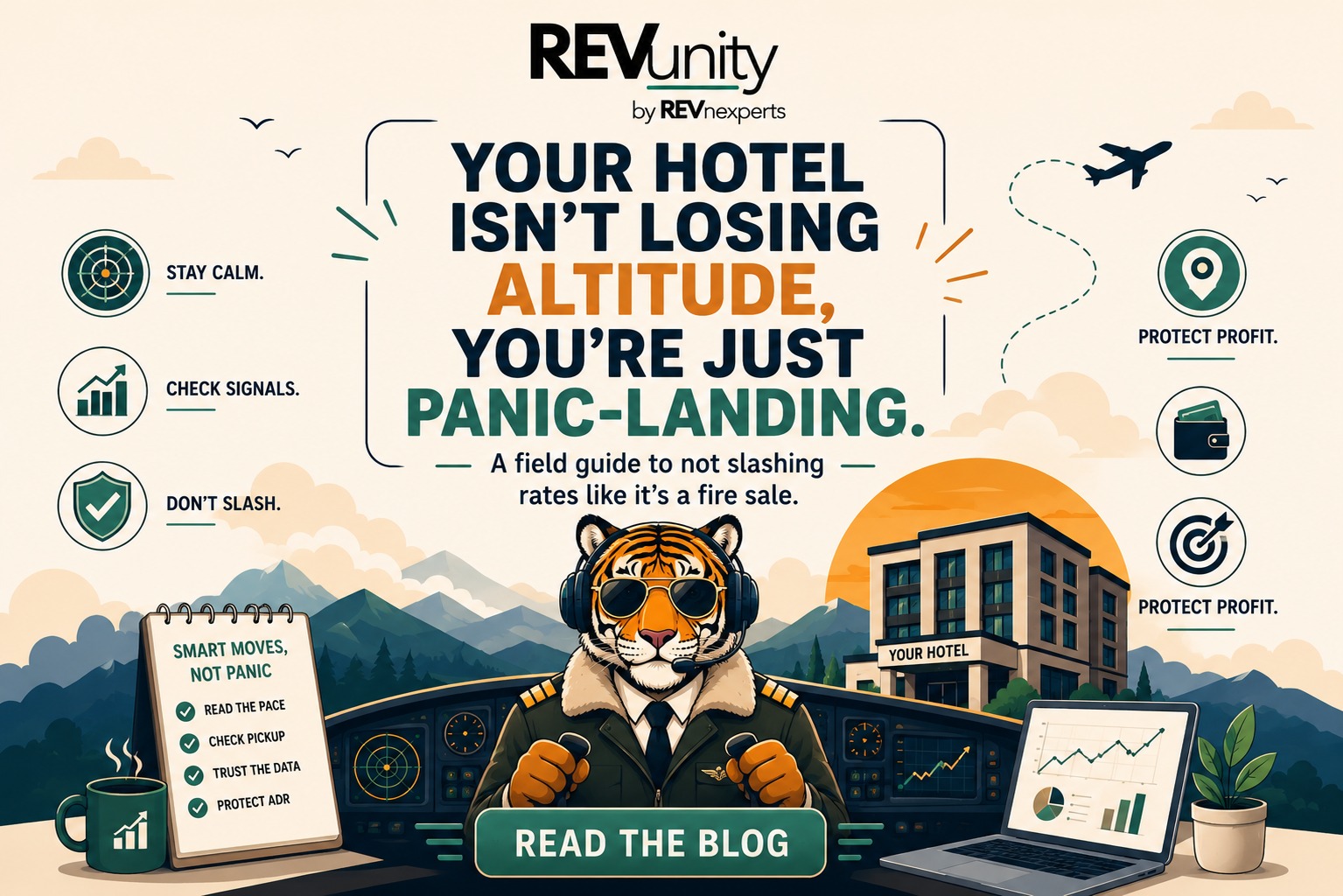
Your Hotel Isn't Losing Altitude, You're Just Panic Landing. A field guide to not slashing rates like it's a fire sale
Soft pickup on a Tuesday isn't turbulence, it's an emergency. Or at least that's how most revenue teams treat it, reaching for a rate cut the second demand looks quiet. This piece makes the case for a different instinct: treat your rate like altitude, not a brake pedal. Before touching the public Best Flexible Rate, there's a 5 level "Protection Ladder" worth climbing first, visibility fixes, targeted offers, value bundling, and opaque channels, each one protecting revenue before you touch the number every OTA can see. The real point: every unnecessary rate cut trains your best guests to just wait you out next time. Read on for the full ladder (and why your best pilots never panic at 50,000 feet).
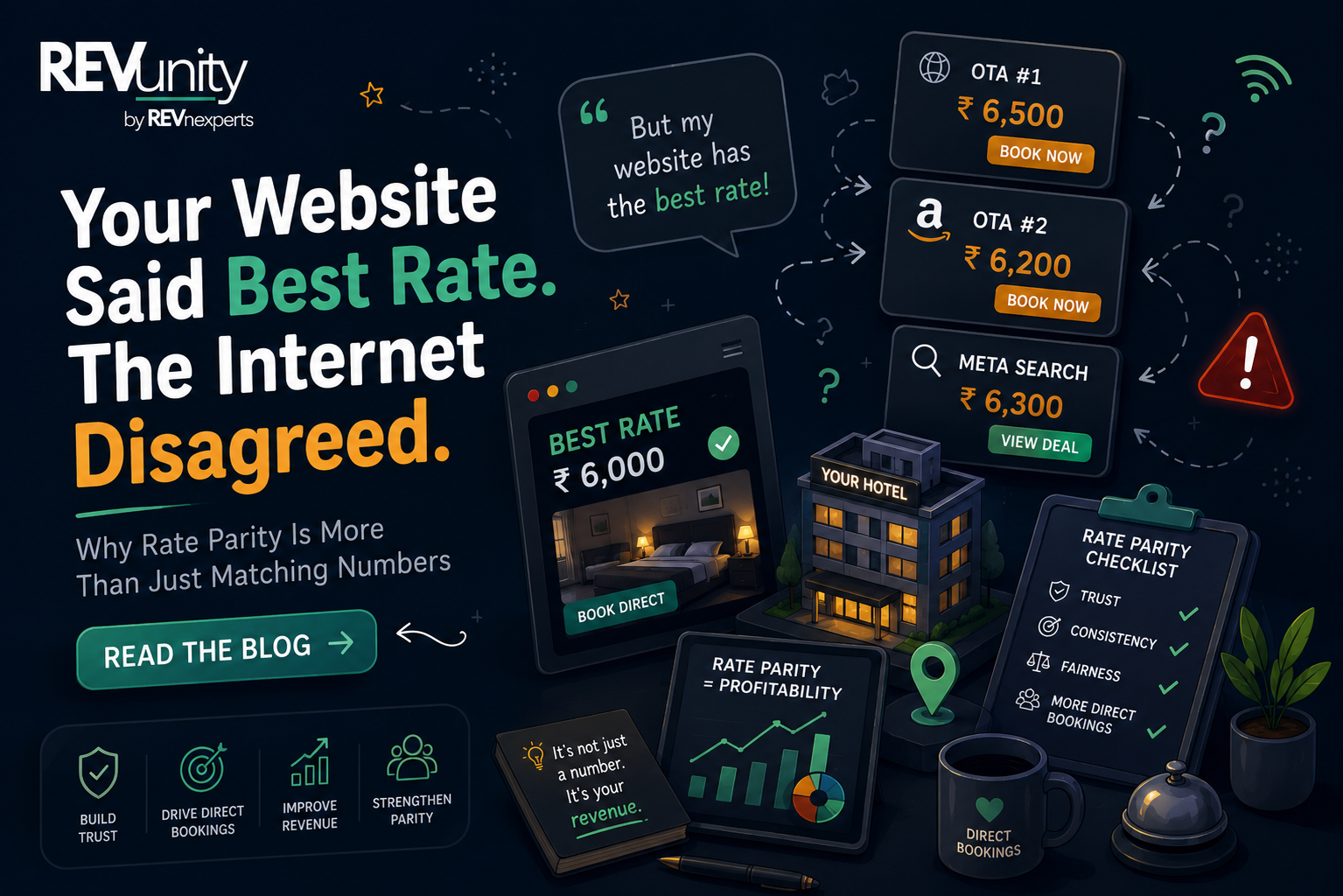
Your Website Said Best Rate. The Internet Disagreed
Somewhere out there, a guest is currently booking your hotel for less than what your own website is quoting them. Right now. As you read this sentence. And the worst part? They found it in about four clicks, while your front desk team swears up and down that "the website rate is our best rate." It's not a myth. It's not a guest lying to negotiate a discount. It genuinely happens and it's one of the most quietly expensive problems in hospitality, because it doesn't just cost you the rate difference. It costs you the guest's trust in your direct channel altogether. Once someone books cheaper elsewhere and it works out fine, they never come back to "book direct for the best rate" again. Why would they? So let's actually figure out where these ghost rates are coming from.

The Ugly Truth About Your Hotel Pricing
Visual Learner? Catch the Video on YouTube You think your pricing is working. You believe your guests book because you are smart with rates. The truth is… if you are still following outdated habits, you are giving away money every single day. And your competitor is laughing all the way to the bank. Let me hold a mirror up to you.

The ₹99,999 mistake
Real Revenue Horror Stories Hoteliers Don’t Talk About On Monday morning everything came crashing down. The revenue report showed a loss of almost one lakh rupees. Guests had booked suites at the price of standard rooms. The reason was simple. A wrong mapping on an OTA went unnoticed. What looked like high demand was actually a flood of underpriced bookings. The impact was immediate:

What Coldplay and BookMyShow teach Hotels about competition Readiness
For years, they were the biggest ticketing platform in India. But now, new-age players like Insider were gaining serious ground. With a fresher interface, deeper youth connect, and founder backing from Zerodha, Insider was slowly becoming the platform of choice, especially for indie gigs and newer experiences. BookMyShow could have responded like most legacy companies.

Short-Term Gain vs. Long-Term Game in Revenue Management
A hotel with a regular average rate of ₹10,000 is now selling at ₹55,000 during "Vibrant Gujarat". Yes, this hotel was part of a well know international brand. I wonder, Is this smart revenue management or just a short-term money grab? Can we say, It's the kind of pricing that fills rooms, grabs headlines, and gives everyone a momentary high? But once the crowds disappear, what's left? A boost in top-line revenue or long-term damage to guest trust, reviews, and loyalty?

Blinkit Prices Groceries Better Than My Rishikesh Hotel Prices Rooms
Direct booking engines Yet we use them like Excel on steroids, not the AI-powered, real-time pricing engines they could be. Cannot say if the problem is tech. But it definitely involves asking the wrong questions with the right tools. Let Us Call It What It Is: 🔴 Static Pricing: “One rate for all” (1990s logic). 🟡 Dynamic Pricing: “Rates change with demand” (better, but still impersonal).