
Forecasting & Data
Turning pace, pickup and segmentation data into decisions instead of dashboards.
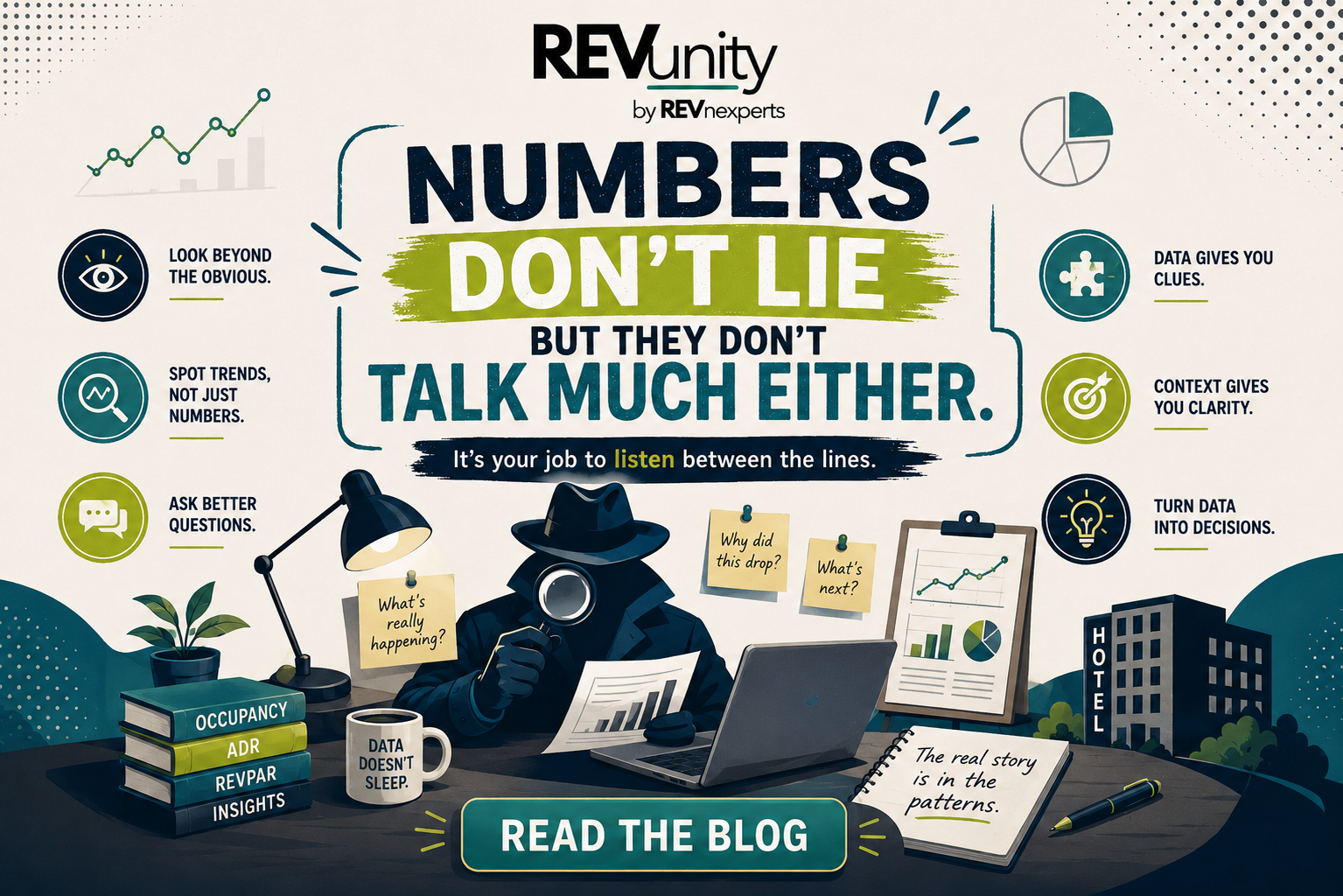
Numbers Don't Lie, But They Don't Talk Much Either
Why hospitality teams need better data habits and how to turn a wall of numbers into a story worth acting on. Hotel and hospitality data including occupancy, ADR, RevPAR, guest scores, only becomes useful once someone asks what it means, not just what it says. Good data habits mean defining your metrics clearly, reading numbers in context, comparing across time and segments, and always asking why before deciding what to do next. Walk into almost any hotel's morning meeting and you'll find the same familiar scene. A dashboard glows on the screen. Occupancy, ADR, and RevPAR scroll past in tidy rows. Someone points at a chart, someone nods, someone writes a number in a notebook that will never be looked at again. The figures are accurate. Nobody in the room disputes them. And yet, more often than not, everyone leaves with exactly the understanding they walked in with. The data was reported. It was never actually read.
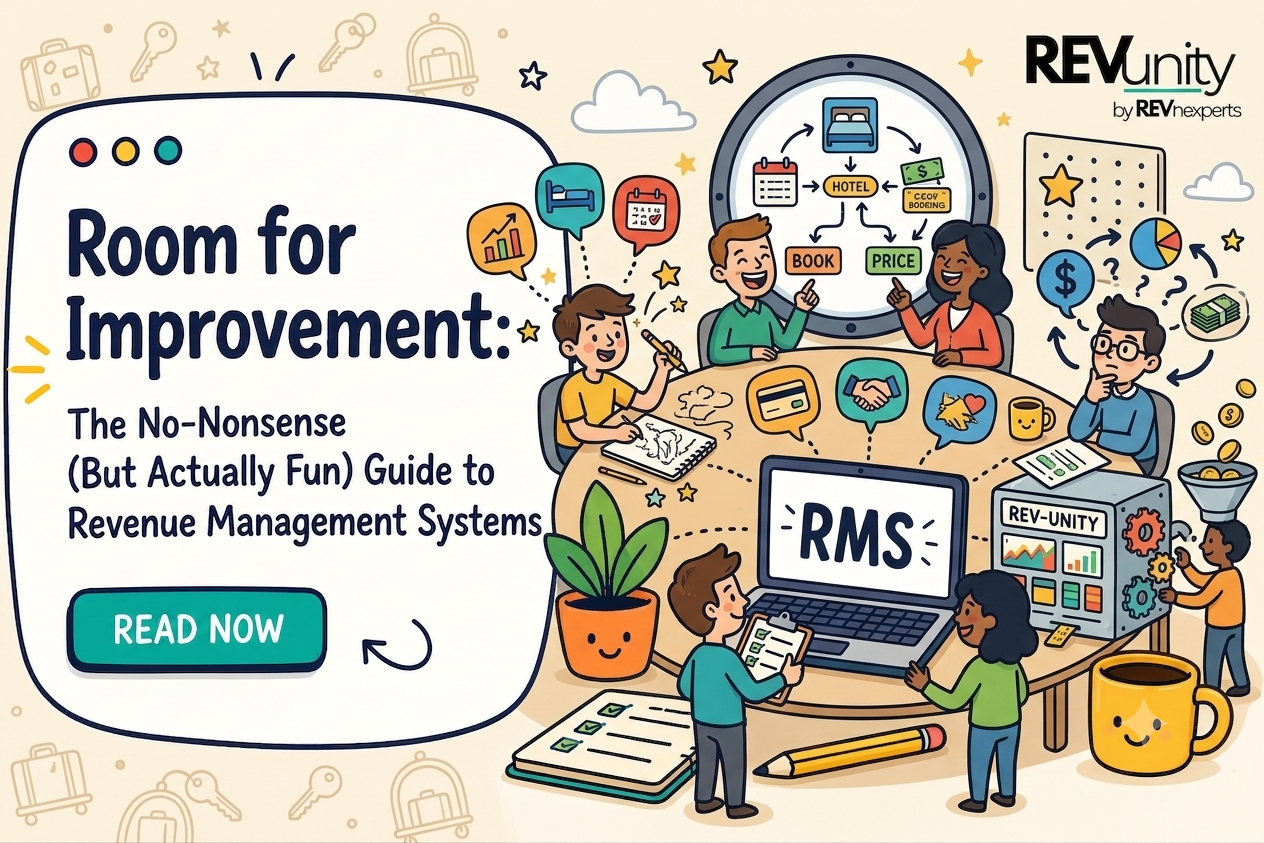
Room for Improvement: The No-Nonsense (But Actually Fun) Guide to Revenue Management Systems
Quick test: if a new front desk hire cornered you and asked "what does an RMS actually do?" could you answer in one sentence, or would you start waving your hands and saying "it's complicated"? No judgment. A lot of revenue managers use their RMS every single day without ever fully unpacking what's happening under the hood. So let's fix that properly, and without the boring textbook voice.

Revenue Reset#2: ARR, RevPAR, TRevPAR, explained like you are 5!
Many hotel operators, despite seeing their properties bustling, especially on weekends, find themselves pondering where the profits truly go. This common conundrum often stems from a lack of clear financial visibility, leading to management based on "feelings" rather than facts.

Running Revenue on a Whistle While Everyone Else Has Signals
Just him. One man. One whistle. And the traffic? Honking, pushing, ignoring. I remember thinking: He's trying his best, but he has no control Not because he doesn't care, but because he's not equipped. Years later, that image still comes back because I see it all the time in independent hotels. Revenue management today, across independent hotels in India, Asia and many part of the world, often looks like this.

How Smart Hotels Are Beating the Competition: Without Lifting a Finger!
At the heart of Mumbai's bustling business district stood The Orion Grand, a luxurious five-star hotel renowned for its impeccable service. Yet, behind its grand façade, the hotel's revenue management team struggled with an age-old challenge: pricing volatility.

From Spreadsheets to AI: How Revenue Management Tech Has Transformed
I remember, when I first started in revenue management at The Oberoi Group, things looked a lot different than they do today. Back then, Excel was king and if you were one of the few who could navigate advanced formulas, pivot tables, and macros, you were already ahead of the game. Revenue decisions relied on spreadsheets, and every update required meticulous manual effort. It wasn't just about setting rates; it was about spotting patterns, forecasting demand, and making strategic decisions with limited tools. The ability to think analytically made all the difference.